
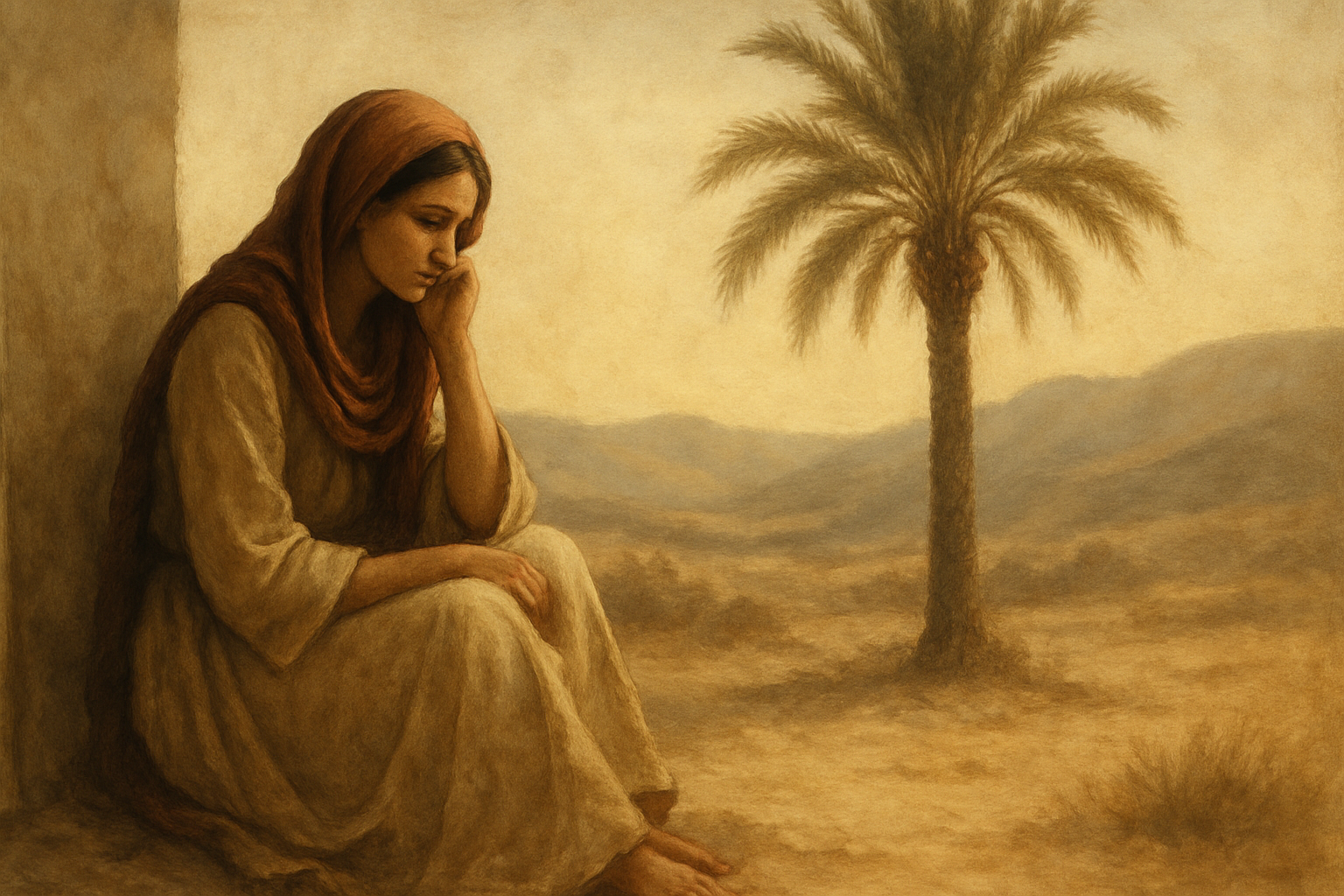
Tamar in the Bible: Meaning, Origin, and Why It Matters
Tamar is one of the most arresting women in Genesis, remembered not for royal status but for a story that shaped the line of Judah. Her Hebrew name is commonly linked with the palm tree, an image that fits her place in Scripture as a figure of endurance, fruitfulness, and surprising significance.
Her account appears in the Old Testament family records of Judah and becomes important far beyond Genesis 38. Tamar’s story connects to the preservation of a covenant lineage, and her name later reappears in the genealogy of Jesus, giving her a lasting place in biblical history and theological reflection.
What Does the Name Tamar Mean?
Tamar is commonly understood to mean ‘date palm’ or ‘palm tree.’ While the exact nuance is not always stated directly in the biblical text, the name fits well within Hebrew naming patterns and biblical imagery associated with growth and vitality.
Origin and Language
- Language: Hebrew
- Gender: Female
- Testament: Old Testament
- Type: Woman of the Bible
Life and Role in Scripture
- Birth / Early Background: Not explicitly recorded in Scripture. Tamar enters the biblical record as the wife of Er, Judah’s firstborn son, and later as Judah’s daughter-in-law.
- Death / Final Biblical Record: Her death is not recorded in Scripture. The biblical narrative leaves her later life unmentioned after the account in Genesis.
- Role / Calling: Widow, daughter-in-law of Judah, and central figure in the preservation of Judah’s family line
- Biblical Context: Tamar appears in the Genesis patriarchal narratives, within the family line of Judah. Her account is tied to questions of justice, family obligation, and the continuation of the covenant line.
- Known For: She is known for securing justice in a difficult family situation and for bearing Perez and Zerah by Judah. Her account is one of the most striking episodes in Genesis 38.
Who Is Tamar in the Bible?
Tamar, the daughter-in-law of Judah, is a memorable Old Testament woman whose story is told in Genesis 38. Her name is commonly linked with the palm tree, a biblical image of endurance and fruitfulness. Her place in Scripture is closely connected to the family line through which Judah’s descendants continued.
Biblical Role and Context
Tamar’s role in Scripture is not presented as public leadership, but as a pivotal family figure whose actions affected the future of Judah’s house. Her story exposes moral failure, social injustice, and the importance of levirate responsibility in ancient Israel. The narrative also places her unexpectedly within the lineage that later leads to David.
Key Bible Verses About Tamar
Genesis 38:6-30 – And Judah took a wife for Er his firstborn, whose name was Tamar. And the LORD knew the story of the family’s failure, Tamar’s deception, and the birth of Perez and Zerah.
Genesis 38:26 – And Judah acknowledged them, and said, She hath been more righteous than I; because that I gave her not to Shelah my son. And he knew her again no more.
Matthew 1:3 – And Judas begat Phares and Zara of Thamar; and Phares begat Esrom; and Esrom begat Aram.
Why Tamar Matters in the Bible
Tamar matters because her account shows that God’s purposes can move forward through complicated and painful circumstances. She is later named in the genealogy of Jesus, giving her story lasting significance in both the Old Testament and New Testament horizons. Her inclusion also highlights the biblical pattern of God working through overlooked women to preserve the covenant line.
Related Names in the Bible
- Judah
- Perez
- Zerah
- Er
- Onan
Frequently Asked Questions
Who was Tamar in the Bible?
Tamar was Judah’s daughter-in-law in Genesis 38. Her account centers on the continuation of Judah’s family line and the birth of Perez and Zerah.
What does the name Tamar mean?
Tamar is commonly understood as meaning ‘date palm’ or ‘palm tree.’ The name is Hebrew in origin and fits biblical imagery of growth and fruitfulness.
Why is Tamar important in Scripture?
Her story is important because it shows how justice, family duty, and God’s providence intersect in Genesis. She is also part of the ancestral line that leads to King David and, later, to Jesus.
Is Tamar mentioned in the New Testament?
Yes. Tamar appears in the genealogy of Jesus in Matthew 1:3, which confirms her enduring place in the biblical story.


Leave A Comment