
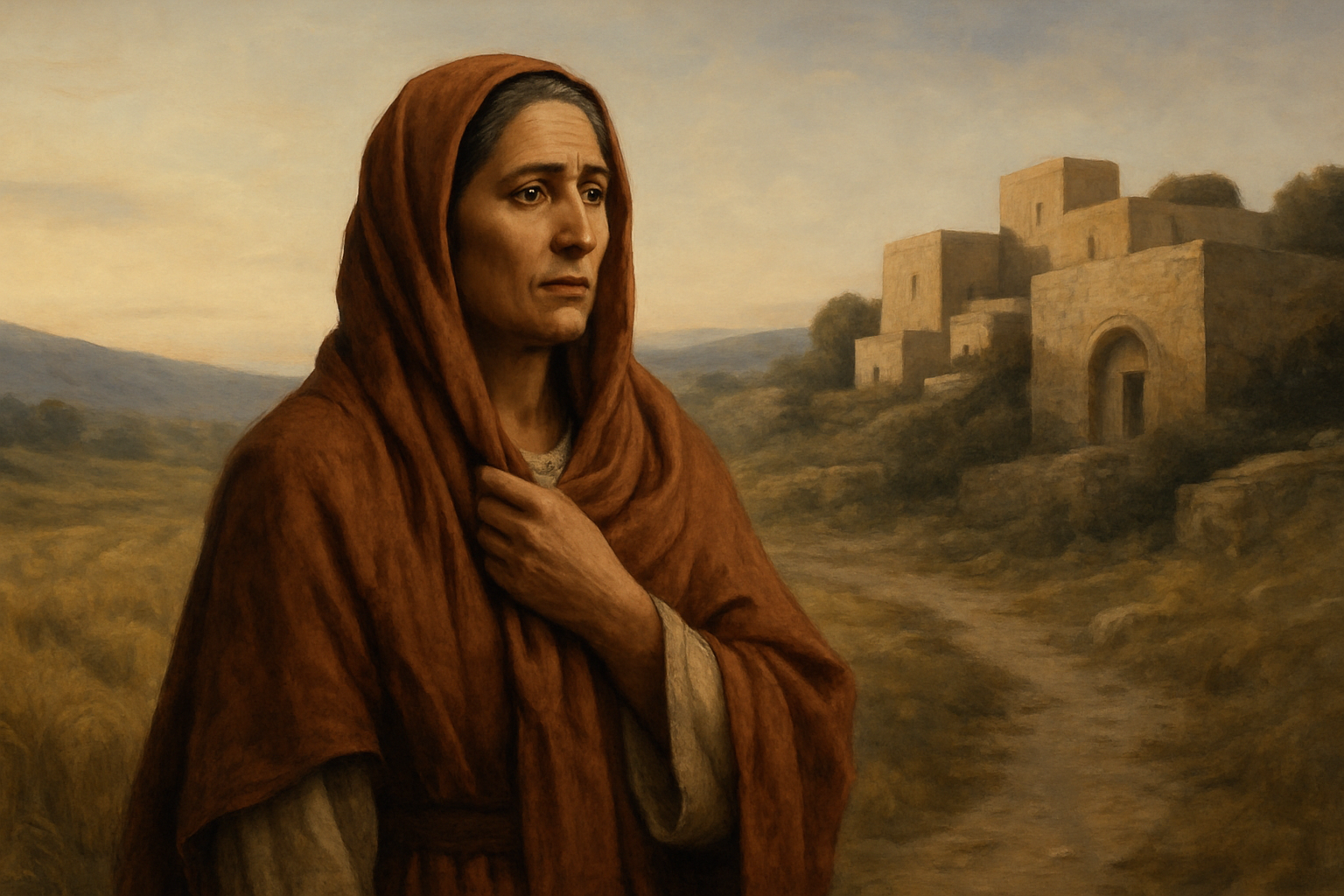
Naomi in the Bible: Meaning, Origin, and Why It Matters
Naomi’s story is one of the most moving portraits of loss and restoration in the Old Testament. Her Hebrew name is traditionally linked with pleasantness, yet the Book of Ruth presents her first through grief, widowhood, and the painful return from Moab to Bethlehem.
Set in the days of the judges, Naomi’s life connects family tragedy with God’s quiet providence. Her role in Ruth’s story, her link to Boaz and the line of David, and her honest lament in Scripture make her an important figure for understanding faith under pressure and hope after sorrow.
What Does the Name Naomi Mean?
Naomi is commonly understood to mean “pleasant” or “sweetness.” Because biblical name meanings are sometimes traditional rather than directly explained in the text, the exact nuance should be treated carefully, but the sense of pleasantness is the usual reference.
Origin and Language
- Language: Hebrew
- Gender: Female
- Testament: Old Testament
- Type: Woman of the Bible
Life and Role in Scripture
- Birth / Early Background: Not explicitly recorded in Scripture. Naomi is introduced as a woman from Bethlehem in Judah who later lived in Moab with her husband and sons during a time of famine.
- Death / Final Biblical Record: Her husband Elimelech and both sons died in Moab, leaving her bereaved before she returned to Bethlehem. Scripture does not record her own death.
- Role / Calling: Israelite matriarch, mother-in-law, and family figure in the Ruth narrative
- Biblical Context: Naomi appears in the Book of Ruth, set during the period of the judges. Her story unfolds against famine, migration, widowhood, and covenant loyalty, and it becomes a key bridge between Israel’s ordinary family life and the royal line of David.
- Known For: She is known for returning to Bethlehem with Ruth and for her honest lament over loss. Her life also highlights restoration, family redemption, and the providence of God working through ordinary events.
Who Is Naomi in the Bible?
Naomi is a central Old Testament woman whose story is told in the Book of Ruth. Her name is traditionally linked with pleasantness, yet her life includes grief, displacement, and eventual restoration. Through Ruth’s loyalty and Boaz’s redemption, Naomi becomes part of a larger account of hope and covenant faithfulness.
Biblical Role and Context
Naomi functions as the experienced elder in the book of Ruth, guiding the narrative from loss toward restoration. Her counsel to Ruth and her return to Bethlehem help connect personal tragedy with God’s unfolding purpose for Israel. She stands as a vivid witness to lament, resilience, and the quiet turning of sorrow into blessing.
Key Bible Verses About Naomi
Ruth 1:20 – And she said unto them, Call me not Naomi, call me Mara: for the Almighty hath dealt very bitterly with me.
Ruth 1:21 – I went out full, and the LORD hath brought me home again empty: why then call ye me Naomi, seeing the LORD hath testified against me, and the Almighty hath afflicted me?
Ruth 4:14-17 – And the women said unto Naomi, Blessed be the LORD, which hath not left thee this day without a kinsman… and they called his name Obed: he is the father of Jesse, the father of David.
Why Naomi Matters in the Bible
Naomi matters because her story shows that God’s providence often works through family bonds, faithful relationships, and ordinary decisions. She also plays an important role in the ancestry leading to David, placing her within the broader redemptive storyline of Scripture. Her life gives a realistic biblical portrait of grief that does not end in despair.
Related Names in the Bible
- Ruth
- Boaz
- Elimelech
- Mahlon
- Chilion
Frequently Asked Questions
What does Naomi mean in the Bible?
Naomi is traditionally understood to mean “pleasant” or “sweetness.” The name fits the way she is first presented, though her story later shows deep sorrow before restoration.
Where is Naomi found in Scripture?
Naomi appears in the Book of Ruth in the Old Testament. Her story begins in Bethlehem, moves to Moab during famine, and returns to Bethlehem after the deaths in her family.
Why is Naomi important in the Book of Ruth?
Naomi connects Ruth’s loyalty to the wider story of redemption. Her family line becomes part of the ancestry that leads to King David.
Is Naomi a prophet or a royal figure?
No. Naomi is not presented as a prophet or ruler. She is an Israelite woman whose story highlights family faithfulness, grief, and God’s care through ordinary life.


Leave A Comment