
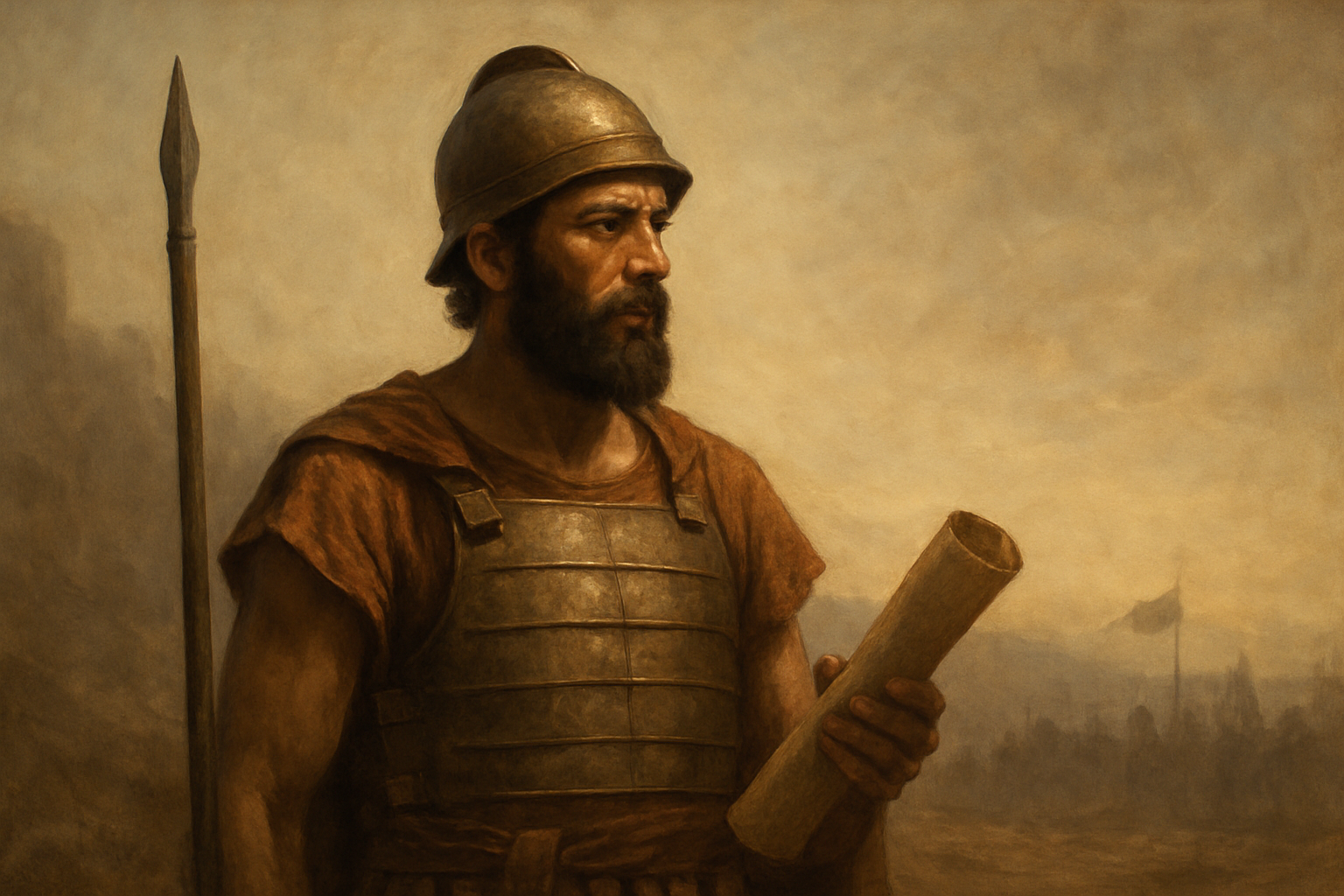
Uriah in the Bible: Meaning, Origin, and Why It Matters
Uriah the Hittite enters the biblical story in one of the most sobering chapters of David’s reign. His Hebrew name is commonly understood as pointing to the LORD as light, while his role in Scripture highlights loyalty, military service, and the tragic consequences of royal sin.
He appears in the Old Testament narrative connected to Bathsheba, Joab, and Nathan, where his presence gives sharp moral clarity to the account. Uriah’s story is brief, but his place in the text is unforgettable because it ties together meaning, covenant faithfulness, and the fallout of abuse of power.
What Does the Name Uriah Mean?
Uriah is commonly understood as meaning “Yahweh is my light” or “the LORD is my light.” The name is rooted in Hebrew and carries a strong sense of divine brightness, guidance, and favor, though the exact nuance is sometimes discussed in scholarship.
Origin and Language
- Language: Hebrew
- Gender: Male
- Testament: Old Testament
- Type: Person
Life and Role in Scripture
- Birth / Early Background: Not explicitly recorded in Scripture. He is introduced as a Hittite man serving in David’s military circle, suggesting a life tied to Israel through covenant loyalty and service rather than birth narrative.
- Death / Final Biblical Record: He was killed in battle after David arranged for him to be placed in the hottest part of the fighting at Rabbah. His death is recorded as part of the darker account surrounding David and Bathsheba.
- Role / Calling: Soldier in David’s army and a loyal warrior
- Biblical Context: Uriah appears in the Old Testament during the reign of King David, in the narrative connected to Bathsheba and the siege of Rabbah. His story is closely tied to the moral failure of David and the serious consequences that followed.
- Known For: He is best known for his integrity, loyalty, and refusal to enjoy comfort while the ark, Israel, and Judah were under hardship. His death became a central part of David’s sin and its fallout.
Who Is Uriah in the Bible?
Uriah the Hittite is remembered as one of the most tragic and honorable figures in David’s reign. Though not an Israelite by ethnicity, he is portrayed as deeply loyal to Israel’s king, army, and covenant life. His story is a sober reminder that Scripture does not hide the cost of sin.
Biblical Role and Context
Uriah serves as a model of disciplined loyalty in stark contrast to David’s failure. In the narrative of 2 Samuel, his integrity highlights the seriousness of betrayal, injustice, and misused power. His presence in the story gives moral weight to the prophetic rebuke that follows.
Key Bible Verses About Uriah
2 Samuel 11:11 – And Uriah said unto David, The ark, and Israel, and Judah, abide in tents; and my lord Joab, and the servants of my lord, are encamped in the open fields; shall I then go into mine house, to eat and to drink, and to lie with my wife? as thou livest, and as thy soul liveth, I will not do this thing.
2 Samuel 11:14-17 – And it came to pass in the morning, that David wrote a letter to Joab, and sent it by the hand of Uriah. And he wrote in the letter, saying, Set ye Uriah in the forefront of the hottest battle, and retire ye from him, that he may be smitten, and die.
2 Samuel 23:39 – Uriah the Hittite: thirty and seven in all.
Why Uriah Matters in the Bible
Uriah matters because his story exposes the consequences of David’s sin in a direct and personal way. He is one of Scripture’s clearest examples of a faithful servant wronged by the very man he served. His memory also reminds readers that biblical history often preserves the voices and losses of those who never held a throne but still mattered deeply.
Related Names in the Bible
Frequently Asked Questions
Who was Uriah the Hittite in the Bible?
Uriah the Hittite was a soldier in King David’s army, noted for his loyalty and integrity. He appears most prominently in the account of David and Bathsheba in 2 Samuel.
What does the name Uriah mean?
Uriah is commonly understood to mean “Yahweh is my light” or “the LORD is my light.” The exact nuance can vary slightly in interpretation, but the name is traditionally linked to God’s light and guidance.
Why is Uriah important in the Bible?
Uriah’s importance lies in both his character and his role in David’s downfall. His faithfulness contrasts sharply with the injustice that led to his death, making his story a serious moral turning point.
Was Uriah an Israelite?
Scripture identifies him as a Hittite, so he was not presented as ethnically Israelite. Even so, he is fully integrated into David’s military setting and shown to be devoted to the life and values of Israel.


