
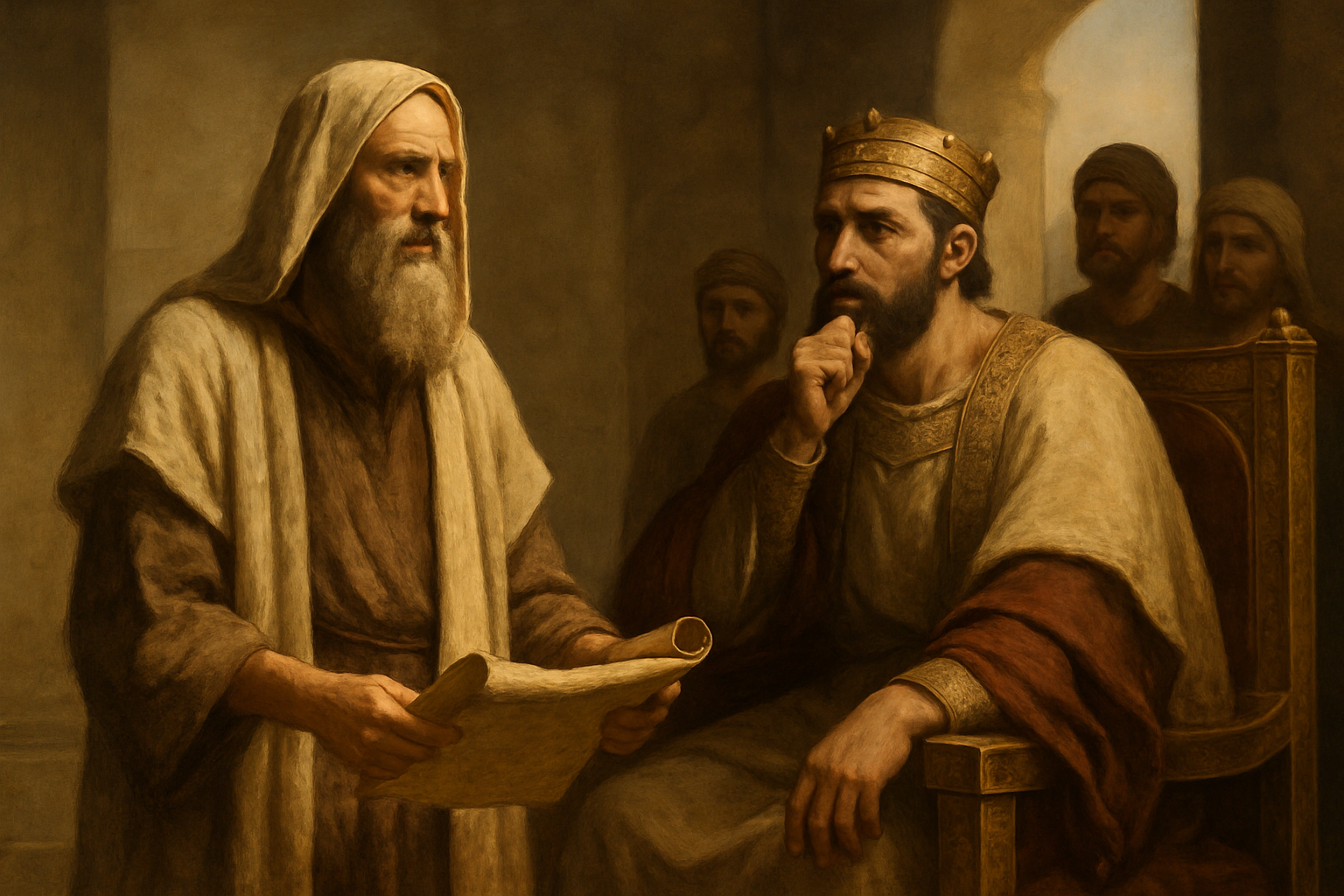
Micaiah in the Bible: Meaning, Origin, and Why It Matters
Micaiah is one of Scripture’s clearest examples of a prophet who would not bend the truth to please a king. His name is commonly understood as “Who is like Yahweh?”, and that question fits the force of his message in the royal setting of 1 Kings 22 and 2 Chronicles 18.
He appears in the Old Testament during a tense moment in Judah’s and Israel’s history, when Ahab sought reassurance for war and most of his prophets offered approval. Micaiah’s role, biblical context, and theological relevance all come into focus in that confrontation, where one faithful voice stood against many confident ones.
What Does the Name Micaiah Mean?
The name Micaiah is commonly understood as “Who is like Yahweh?” It is a Hebrew name that points to the unique greatness of God and suits a prophet whose life and message were shaped by loyalty to the Lord.
Origin and Language
- Language: Hebrew
- Gender: Male
- Testament: Old Testament
- Type: Prophet
Life and Role in Scripture
- Birth / Early Background: Not explicitly recorded in Scripture. He appears as a prophet in the divided kingdom period, associated with Judah rather than the northern court.
- Death / Final Biblical Record: His death is not recorded in Scripture.
- Role / Calling: Prophet and truth-teller in the royal court
- Biblical Context: Micaiah appears in the account of King Ahab’s campaign against Ramoth-gilead, where he stands apart from the many court prophets who promise victory. His message places him in a moment of national decision, showing the tension between political pressure and the word of the Lord.
- Known For: He is best known for warning Ahab that the Lord had not approved the war and for speaking with unusual clarity even when it brought him into conflict with the king. His prophecy also includes the vision of Israel scattered on the hills and the divine council scene that exposes deception among the prophets.
Who Is Micaiah in the Bible?
Micaiah the prophet of Judah is remembered for his courage before a powerful king and for refusing to soften the Lord’s message. In 1 Kings 22 and the parallel account in 2 Chronicles 18, he stands as a rare voice of truth when most others were saying what Ahab wanted to hear. His name, often understood as “Who is like Yahweh?”, fits his role well.
Biblical Role and Context
Micaiah serves as a biblical model of faithful prophetic witness. He speaks with restraint, but his words carry weight because he is committed to reporting what God reveals, not what rulers prefer. His account shows how true prophecy can expose false confidence and call leaders back to truth.
Key Bible Verses About Micaiah
1 Kings 22:14 – And Micaiah said, As the LORD liveth, what the LORD saith unto me, that will I speak.
1 Kings 22:17 – And he said, I saw all Israel scattered upon the hills, as sheep that have not a shepherd: and the LORD said, These have no master; let them return every man to his house in peace.
1 Kings 22:19-23 – And he said, Hear thou therefore the word of the LORD: I saw the LORD sitting on his throne, and all the host of heaven standing by him on his right hand and on his left. And there came forth a spirit, and stood before the LORD, and said, I will persuade him. And the LORD said unto him, Wherewith? And he said, I will go forth, and I will be a lying spirit in the mouth of all his prophets. And he said, Thou shalt persuade him, and prevail also: go forth, and do so. Now therefore, behold, the LORD hath put a lying spirit in the mouth of all these thy prophets, and the LORD hath spoken evil concerning thee.
2 Chronicles 18:13 – And Micaiah said, As the LORD liveth, even what my God saith, that will I speak.
2 Chronicles 18:18-22 – Again he said, Therefore hear the word of the LORD; I saw the LORD sitting upon his throne, and all the host of heaven standing on his right hand and on his left. And the LORD said, Who shall entice Ahab king of Israel, that he may go up and fall at Ramoth-gilead? Then there came out a spirit, and said, I will entice him. And the LORD said unto him, Wherewith? And he said, I will go out, and be a lying spirit in the mouth of all his prophets. And the LORD said, Thou shalt entice him, and thou shalt also prevail: go out, and do even so.
Why Micaiah Matters in the Bible
Micaiah matters because he represents the cost of honesty in the presence of power. His brief appearance is memorable precisely because he does not repeat the crowd; instead, he anchors his message in the authority of God. For readers, he highlights the importance of discerning truth when religious voices are divided.
Related Names in the Bible
Frequently Asked Questions
Who was Micaiah in the Bible?
Micaiah was a prophet in Judah who confronted King Ahab with an unwelcome but truthful message from the Lord. He appears most clearly in 1 Kings 22 and 2 Chronicles 18.
What does the name Micaiah mean?
It is commonly understood as “Who is like Yahweh?” The meaning reflects a Hebrew pattern of naming that honors God’s uniqueness.
Why did Micaiah stand out among the prophets?
Unlike the court prophets who promised success, Micaiah spoke a warning that exposed false confidence and spiritual deception. His message was unpopular, but it was presented as the true word of the Lord.
Where can I read about Micaiah?
The main accounts are found in 1 Kings 22:14-28 and 2 Chronicles 18:12-27. Those passages show both his prophecy and the reaction it received from the king.


