
Rephael in the Bible: Meaning, Origin, and Why It Matters
Rephael is one of the Bible’s most intriguing angelic figures, especially for readers drawn to healing, guidance, and unseen providence. His name is traditionally linked with the idea that God heals, and that meaning fits the role he plays in the Book of Tobit, where divine help arrives quietly and faithfully.
Although Rephael is not part of the standard Protestant Old Testament canon, he appears in a well-known biblical tradition preserved in the Book of Tobit. In that account, his identity, mission, and connection to healing give him lasting importance in Christian reflection on angels, divine care, and the way God works through messengers.
What Does the Name Rephael Mean?
Rephael is commonly understood as meaning “God has healed” or “God heals.” The exact sense depends on how the Hebrew elements are understood, but the name is clearly associated with healing language and divine restoration.
Origin and Language
- Language: Hebrew
- Gender: Angelic
- Testament: Old Testament
- Type: Angel
Life and Role in Scripture
- Birth / Early Background: Not applicable for an angelic being.
- Death / Final Biblical Record: Not applicable for an angelic being.
- Role / Calling: Angelic guide and messenger associated with healing and divine protection
- Biblical Context: Rephael appears in the Book of Tobit, where he accompanies Tobias and helps bring about healing and deliverance. His identity is revealed at the close of the story, emphasizing that his work was part of God’s hidden care.
- Known For: Serving as Tobias’s companion, revealing himself as one of the angels who stand before God, and being associated with healing in the Tobit narrative.
Who Is Rephael in the Bible?
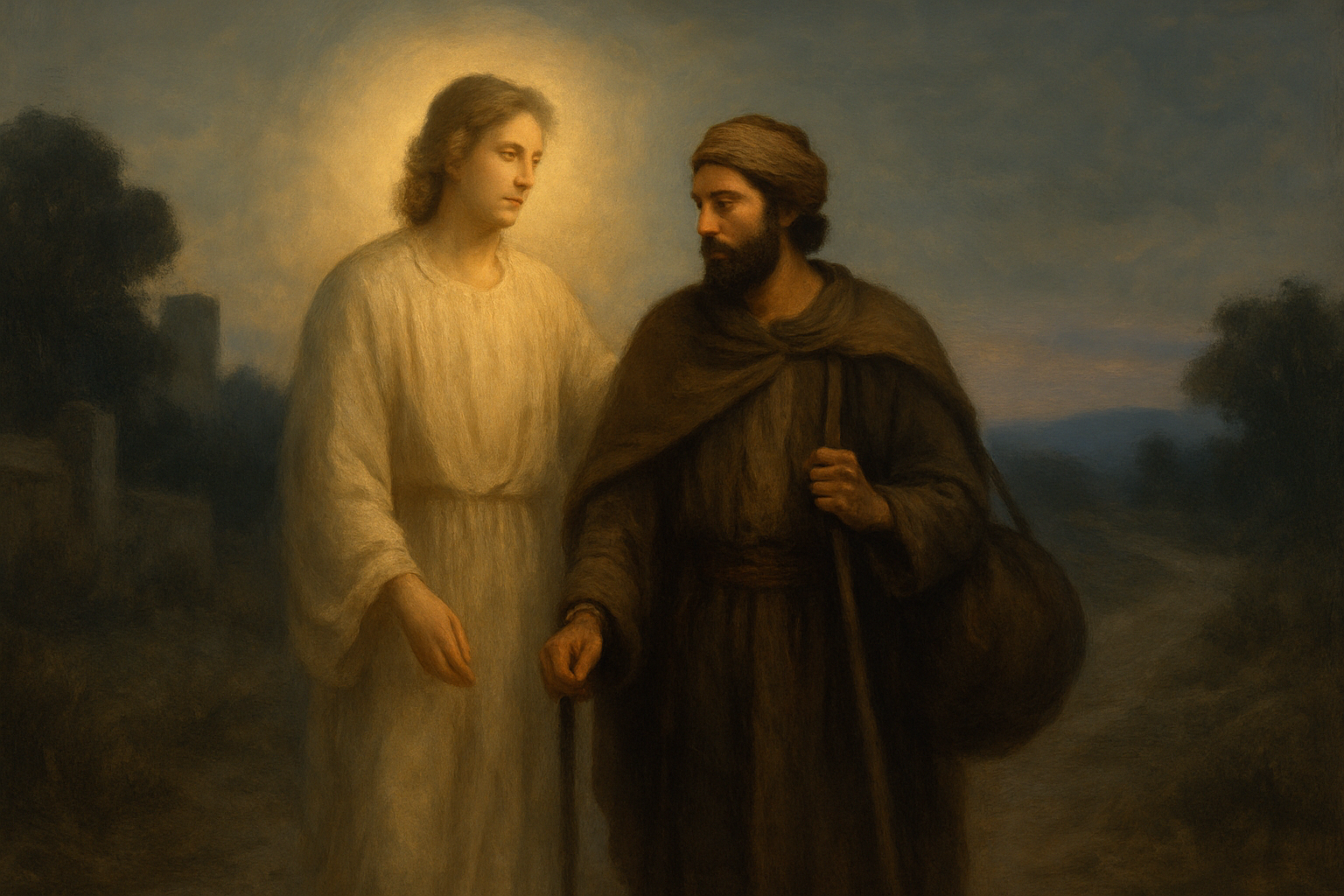
Rephael is an angelic figure known from the Book of Tobit, where he travels with Tobias under an ordinary appearance. The story later reveals that he is a heavenly messenger sent to help bring healing, protection, and restored blessing to a troubled family. His role makes him one of the most memorable angel figures in the broader biblical tradition.
Biblical Role and Context
Rephael’s role is shaped by quiet ministry rather than spectacle. He walks beside Tobias, gives practical instruction, and remains concealed until the time comes to disclose his true identity. That pattern highlights a biblical theme: God’s help may be working long before it is recognized.
Key Bible Verses About Rephael
Tobit 5:4 – So he went out, and the angel went with him; and the dog went after them. And the youth’s mother wept and said unto Tobias, Why hast thou sent away our son? Is it not enough that he should be out of our sight?
Tobit 6:3 – Then the fish shall be taken, and the heart and the liver and the gall shall be kept; for these are good for a medicine.
Tobit 12:15 – I am Raphael, one of the seven holy angels, which present the prayers of the saints, and which go in and out before the glory of the Holy One.
Why Rephael Matters in the Bible
Rephael matters because he illustrates the biblical idea that God’s care can be active even when it is not immediately seen. His name, linked to healing, matches the story’s emphasis on restoration and mercy. For readers interested in angels, he provides one of Scripture’s clearest portraits of an angelic messenger working within God’s saving purpose.
Related Names in the Bible
Frequently Asked Questions
Is Rephael an angel in the Bible?
Rephael is presented as an angelic figure in the Book of Tobit, where he later identifies himself as one of the angels who stand before God.
What does Rephael’s name mean?
It is commonly understood to mean “God heals” or “God has healed,” which matches his role in the Tobit narrative.
Why is Rephael associated with healing?
His name and his mission in Tobit are both tied to restoration, deliverance, and healing, making that association natural in biblical tradition.
Is the Book of Tobit in every Bible?
No. Tobit is included in Catholic and Orthodox Bibles, but it is not part of the Protestant Old Testament canon.