
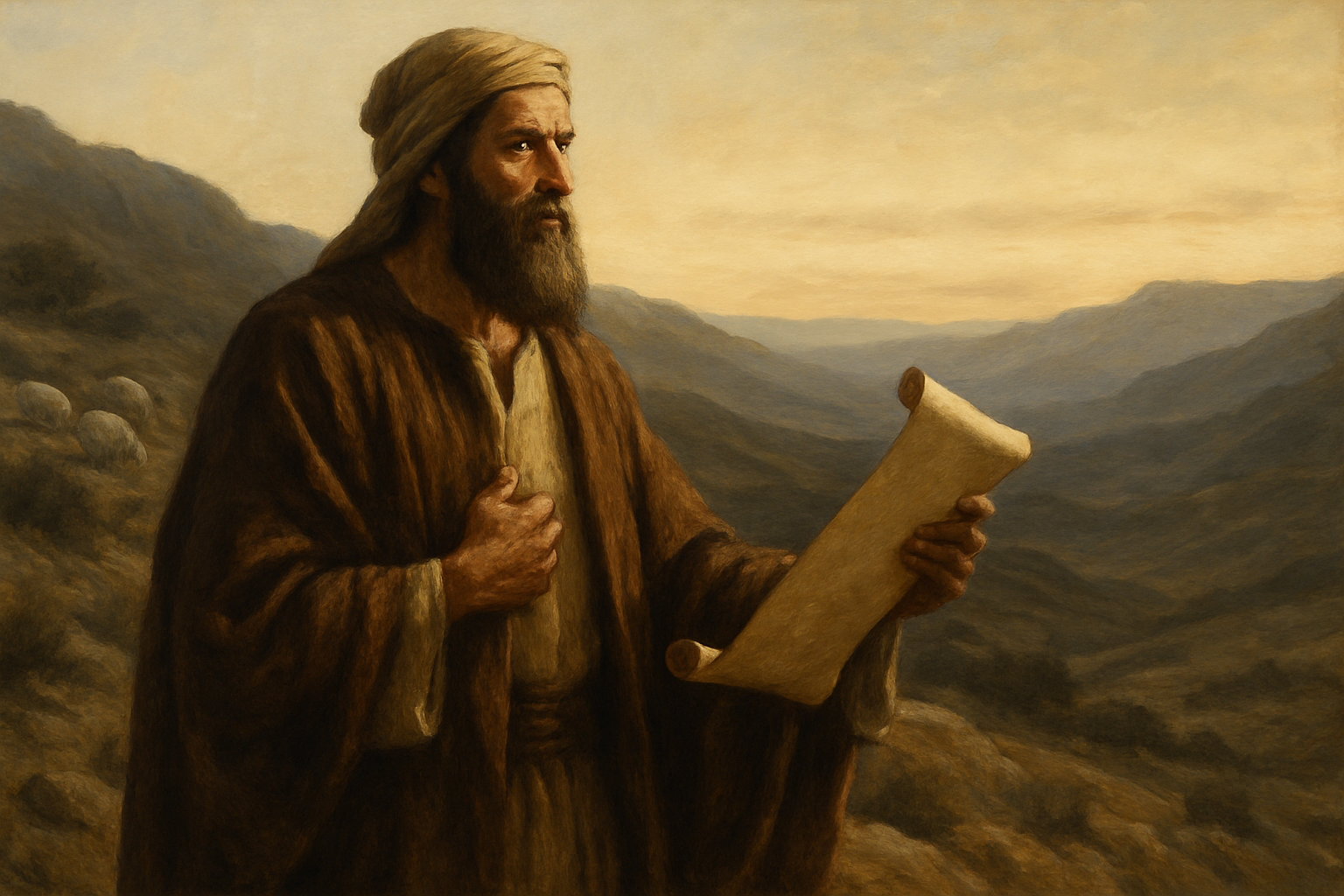
Amos in the Bible: Meaning, Origin, and Why It Matters
Amos is one of Scripture’s clearest voices for justice, and his name fits the weight of his message. A shepherd from Tekoa, he steps into the Old Testament story as a prophet sent to confront Israel’s comfort, corruption, and empty religion.
His background gives added force to his calling: Amos was not introduced as a palace insider, but as a man from the countryside who carried God’s word to a nation in need of correction. The meaning of his name is commonly associated with bearing a burden, which suits both his message and the demanding role he fulfilled in the northern kingdom.
What Does the Name Amos Mean?
Amos is commonly understood as meaning “burden-bearer” or “one who carries a load,” though the exact derivation is not fully certain. The name is usually treated as a Hebrew name and is fitting for a prophet whose message carried a heavy warning for Israel.
Origin and Language
- Language: Hebrew
- Gender: Male
- Testament: Old Testament
- Type: Prophet
Life and Role in Scripture
- Birth / Early Background: Not explicitly recorded in Scripture. Amos is identified as a shepherd and dresser of sycamore figs from Tekoa, suggesting a rural background in Judah before his prophetic call.
- Death / Final Biblical Record: His death is not recorded in Scripture. The biblical text preserves his prophetic message rather than later biographical detail.
- Role / Calling: Prophet and covenant messenger
- Biblical Context: Amos appears in the Old Testament during a period of prosperity, social injustice, and spiritual decline in Israel. His ministry is directed especially toward the northern kingdom, where he confronts false security and unfaithful worship.
- Known For: Delivering forceful warnings against injustice, hypocrisy, and religious empty ritual. He is also known for calling Israel to seek the LORD and live.
Who Is Amos in the Bible?
Amos is a prophetic voice from Tekoa whose message cuts through outward religion and exposes inward corruption. Though he came from a humble background, he was sent to speak with uncommon moral clarity to a nation at ease with its own sin. His book remains one of Scripture’s strongest calls to justice, repentance, and covenant faithfulness.
Biblical Role and Context
Amos serves as a classic example of an Old Testament prophet who speaks God’s word into national complacency. His calling shows that divine authority does not depend on social rank, but on God’s commission. In the book bearing his name, he confronts Israel’s leaders, priests, and people with the demand to turn back to the LORD.
Key Bible Verses About Amos
Amos 1:1 – The words of Amos, who was among the herdmen of Tekoa, which he saw concerning Israel in the days of Uzziah king of Judah, and in the days of Jeroboam the son of Joash king of Israel.
Amos 5:24 – But let judgment run down as waters, and righteousness as a mighty stream.
Amos 7:14-15 – Then answered Amos, and said to Amaziah, I was no prophet, neither was I a prophet’s son; but I was an herdman, and a gatherer of sycomore fruit: And the LORD took me as I followed the flock, and the LORD said unto me, Go, prophesy unto my people Israel.
Amos 8:11-12 – Behold, the days come, saith the Lord GOD, that I will send a famine in the land, not a famine of bread, nor a thirst for water, but of hearing the words of the LORD.
Why Amos Matters in the Bible
Amos matters because he binds together worship and righteousness, refusing to separate devotion to God from justice toward others. His preaching continues to shape biblical ethics by insisting that religious ceremony without obedience is empty. He also reminds readers that God raises up unexpected messengers to call His people to account.
Related Names in the Bible
Frequently Asked Questions
What does the name Amos mean in the Bible?
Amos is commonly understood as meaning “burden-bearer” or “one who carries a load,” though the precise etymology is not certain in every reference tradition.
Who was Amos in Scripture?
Amos was an Old Testament prophet from Tekoa who was sent to speak to the northern kingdom of Israel during a time of prosperity and spiritual drift.
Why is Amos important?
His book strongly connects true worship with justice and repentance, challenging any faith that keeps religious language but ignores moral obedience.
Was Amos a priest or a prophet by profession?
Scripture presents him as a shepherd and fig dresser whom God called into prophetic ministry, not as a professional court prophet or priest.


