
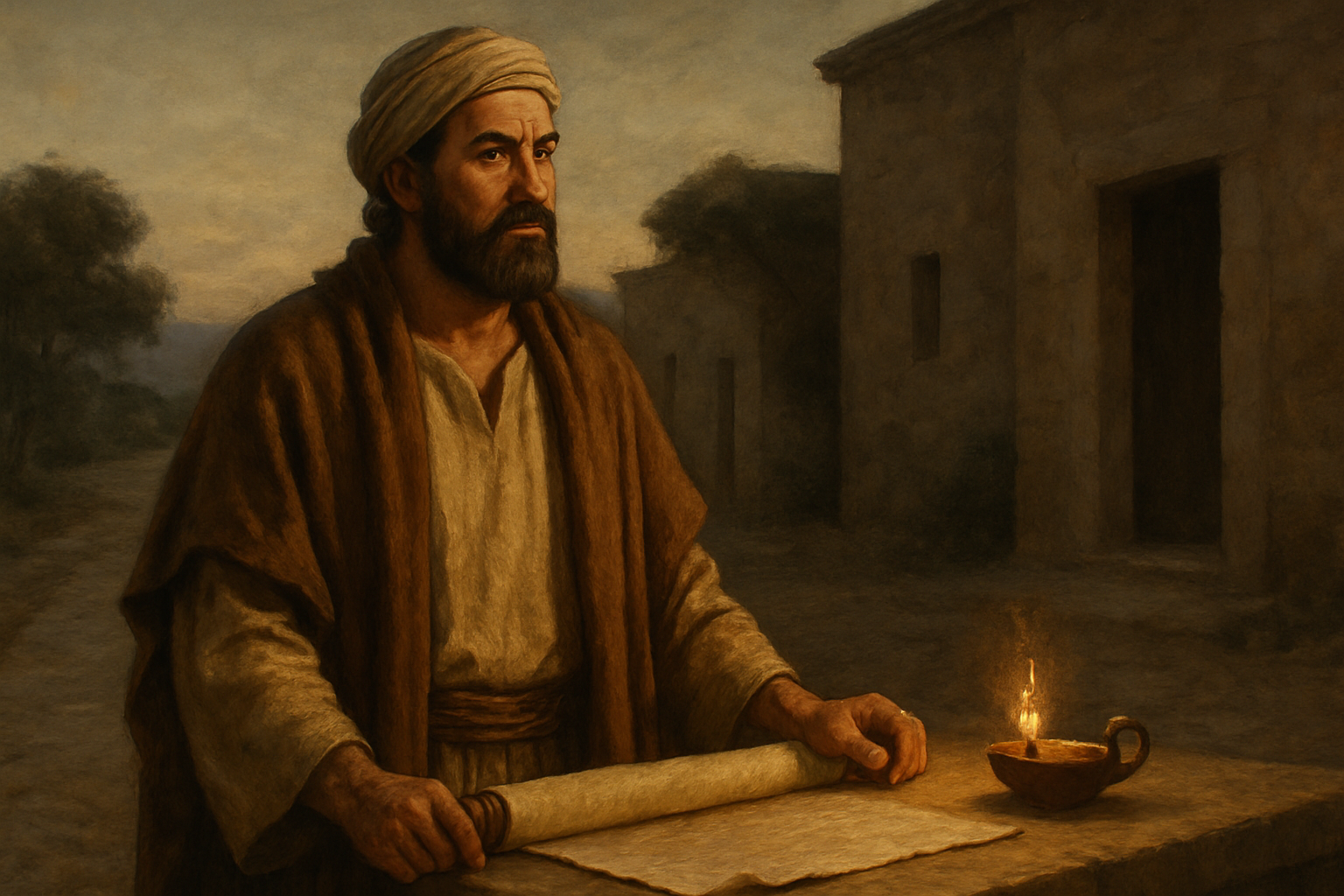
Silas in the Bible: Meaning, Origin, and Why It Matters
Silas is one of the New Testament’s most dependable supporting figures, a leader who steps into the story at a decisive moment in the early church. His name is commonly linked with a Greek form of a Semitic name, and his ministry is tied closely to Acts, the Jerusalem council, and Paul’s missionary work.
Rather than seeking attention, Silas helps carry the apostolic message into new places and new communities. He appears as a prophet, a messenger, and a fellow laborer in the gospel, which makes him especially valuable for understanding how the church grew through faithful partnership and not through apostles alone.
What Does the Name Silas Mean?
The meaning of Silas is not fully certain. It is commonly understood as a Greek form related to the name Saul, with a Semitic background, though Bible reference works do not always agree on a precise derivation. For that reason, the name is best treated carefully rather than overexplained.
Origin and Language
- Language: Greek
- Gender: Male
- Testament: New Testament
- Type: Person
Life and Role in Scripture
- Birth / Early Background: Not explicitly recorded in Scripture. He appears in the early church as a recognized leader among the Jerusalem believers and likely had Jewish roots with a Greek form of his name.
- Death / Final Biblical Record: Not clearly recorded in Scripture. The Bible does not give a detailed account of his death or final years.
- Role / Calling: Prophet, missionary companion, and early church leader
- Biblical Context: Silas appears in the Acts narrative during the expansion of the church beyond Jerusalem. He is closely associated with Paul and with the Jerusalem council’s decision regarding Gentile believers.
- Known For: Serving as Paul’s companion on missionary journeys and helping deliver the Jerusalem council letter. He is also remembered for preaching, encouraging believers, and enduring imprisonment with worship and prayer.
Who Is Silas in the Bible?
Silas is a New Testament believer who helped shape the church’s early mission. He is first seen as a trusted representative of the Jerusalem church, then as a co-worker with Paul in the spread of the gospel. His story is brief compared with the major apostles, but it is full of significance.
Biblical Role and Context
Silas functioned as a bridge between the Jerusalem church and the Gentile mission field. In Acts, he is sent with Paul and Barnabas’s circle, then joins Paul in further missionary work across Macedonia and Greece. He is presented as a prophet and a reliable witness who strengthened believers through teaching and encouragement.
Key Bible Verses About Silas
Acts 15:22 – Then pleased it the apostles and elders, with the whole church, to send chosen men of their own company to Antioch with Paul and Barnabas; namely Judas surnamed Barsabas and Silas, chief men among the brethren.
Acts 15:32 – And Judas and Silas, being prophets also themselves, exhorted the brethren with many words, and confirmed them.
Acts 16:19-25 – And when her masters saw that the hope of their gains was gone, they caught Paul and Silas, and drew them into the marketplace unto the rulers. … And at midnight Paul and Silas prayed, and sang praises unto God: and the prisoners heard them.
Why Silas Matters in the Bible
Silas matters because he shows how God uses faithful, lesser-known servants in major moments of the New Testament story. His ministry alongside Paul helped establish churches and confirm apostolic teaching among new believers. He also models steady faith under pressure, especially in scenes of suffering and praise. For readers, Silas represents loyal partnership in gospel work and the quiet strength of early Christian leadership.
Related Names in the Bible
Frequently Asked Questions
Who was Silas in the Bible?
Silas was an early Christian leader, prophet, and missionary companion of Paul. He appears prominently in the book of Acts and is also known in some passages as Silvanus.
What does the name Silas mean?
Silas is commonly understood as a Greek form related to a Semitic name such as Saul, though the exact derivation is not fully certain.
Why is Silas important in Acts?
Silas helped deliver the Jerusalem council’s letter, joined Paul on missionary journeys, and strengthened churches through teaching and encouragement.
Is Silas the same person as Silvanus?
Many Bible readers and scholars connect Silas with Silvanus, the name used in some New Testament letters. The identification is common, though the biblical books do not always explain it in detail.