
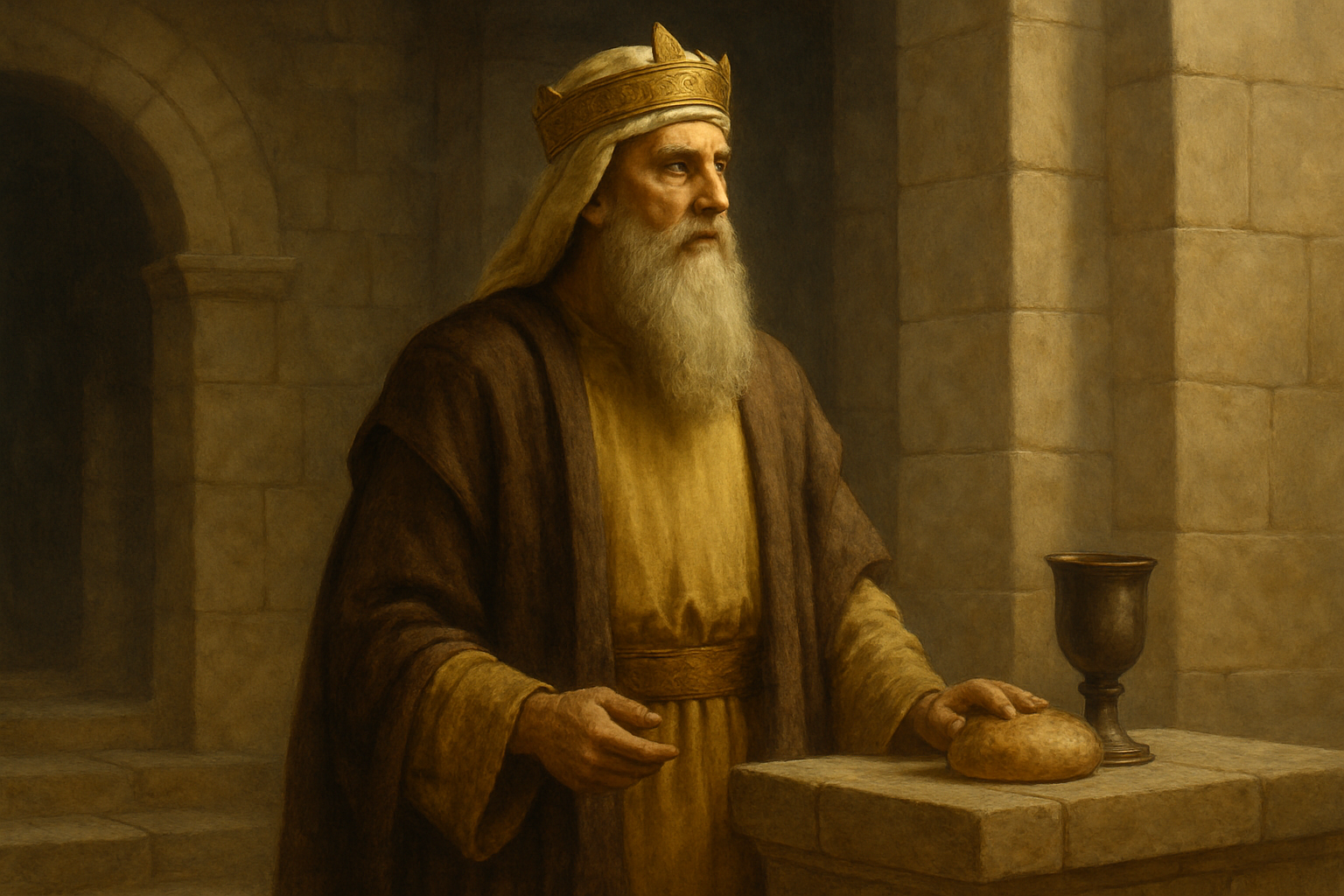
Melchizedek in the Bible: Meaning, Origin, and Why It Matters
Few Old Testament figures leave such a large theological footprint with so few recorded words. Melchizedek appears as king of Salem and priest of God Most High, and his name is often understood as “king of righteousness,” a fitting description for a figure who blesses Abram and receives his tithe.
His brief appearance in Genesis is not the end of his story in Scripture. Melchizedek is remembered again in Psalm 110 and in Hebrews, where his priesthood becomes a key way of understanding the greatness of Christ’s priestly work and the Bible’s larger storyline.
What Does the Name Melchizedek Mean?
Melchizedek is commonly understood as meaning “king of righteousness,” usually from Hebrew elements associated with kingship and righteousness. Because ancient names can have more than one possible linguistic explanation, the meaning is best treated as a traditional and widely accepted interpretation rather than an absolute certainty.
Origin and Language
- Language: Hebrew
- Gender: Male
- Testament: Old Testament
- Type: Person
Life and Role in Scripture
- Birth / Early Background: His family line, birthplace, and early background are not recorded in Scripture. He appears suddenly in Genesis as king of Salem and priest of God Most High.
- Death / Final Biblical Record: Not clearly recorded in Scripture. Genesis and later biblical references do not provide an account of his death or final days.
- Role / Calling: King of Salem and priest of God Most High
- Biblical Context: Melchizedek appears in the patriarchal era, meeting Abram after a military victory and blessing him in the name of God Most High. He is later remembered in the Psalms and the Epistle to the Hebrews as a significant priestly figure.
- Known For: He blessed Abram and received tithes from him, making him a unique figure in the early biblical narrative. Later Scripture uses him as an important pattern for priesthood that is superior to the Levitical line.
Who Is Melchizedek in the Bible?
Melchizedek is one of the most intriguing figures in the Old Testament. He appears briefly in Genesis 14 as both king of Salem and priest of God Most High, then reappears in later Scripture as a theological reference point. His name is often linked with righteousness, and his role connects kingship with priesthood in a striking way.
Biblical Role and Context
Melchizedek functions as a royal-priestly figure who blesses Abram and receives a tithe in return. In biblical theology, he becomes a model for priesthood that predates and exceeds the Levitical system. Hebrews presents him as a key pattern for understanding the priesthood of Christ.
Key Bible Verses About Melchizedek
Genesis 14:18-20 – And Melchizedek king of Salem brought forth bread and wine: and he was the priest of the most high God. And he blessed him, and said, Blessed be Abram of the most high God, possessor of heaven and earth: And blessed be the most high God, which hath delivered thine enemies into thy hand. And he gave him tithes of all.
Psalm 110:4 – The LORD hath sworn, and will not repent, Thou art a priest for ever after the order of Melchizedek.
Hebrews 5:6 – As he saith also in another place, Thou art a priest for ever after the order of Melchisedec.
Why Melchizedek Matters in the Bible
Melchizedek matters because his brief appearance carries lasting theological weight. He shows that God’s priestly work was already active before Sinai and the Law. His story also provides one of the clearest Old Testament foundations for the New Testament teaching about the priesthood of Jesus. For Bible readers, he is a reminder that important themes can be introduced in very few verses yet shape the whole canon.
Related Names in the Bible
- Abram
- Shem
- David
- Jesus
Frequently Asked Questions
Who was Melchizedek in the Bible?
Melchizedek was the king of Salem and priest of God Most High who met Abram after Abram’s victory. Scripture presents him as a unique and important priestly figure.
What does the name Melchizedek mean?
His name is commonly understood as “king of righteousness,” though the exact linguistic details are not fully certain in every discussion.
Why is Melchizedek important in Hebrews?
Hebrews uses Melchizedek to explain a priesthood that is greater than the Levitical priesthood. He serves as a pattern that helps readers understand Christ’s priestly role.
Is Melchizedek a real biblical person?
Yes. He appears directly in Genesis 14 and is also referenced in Psalm 110 and Hebrews, making him a clear biblical figure rather than a fictional name.


Leave A Comment