
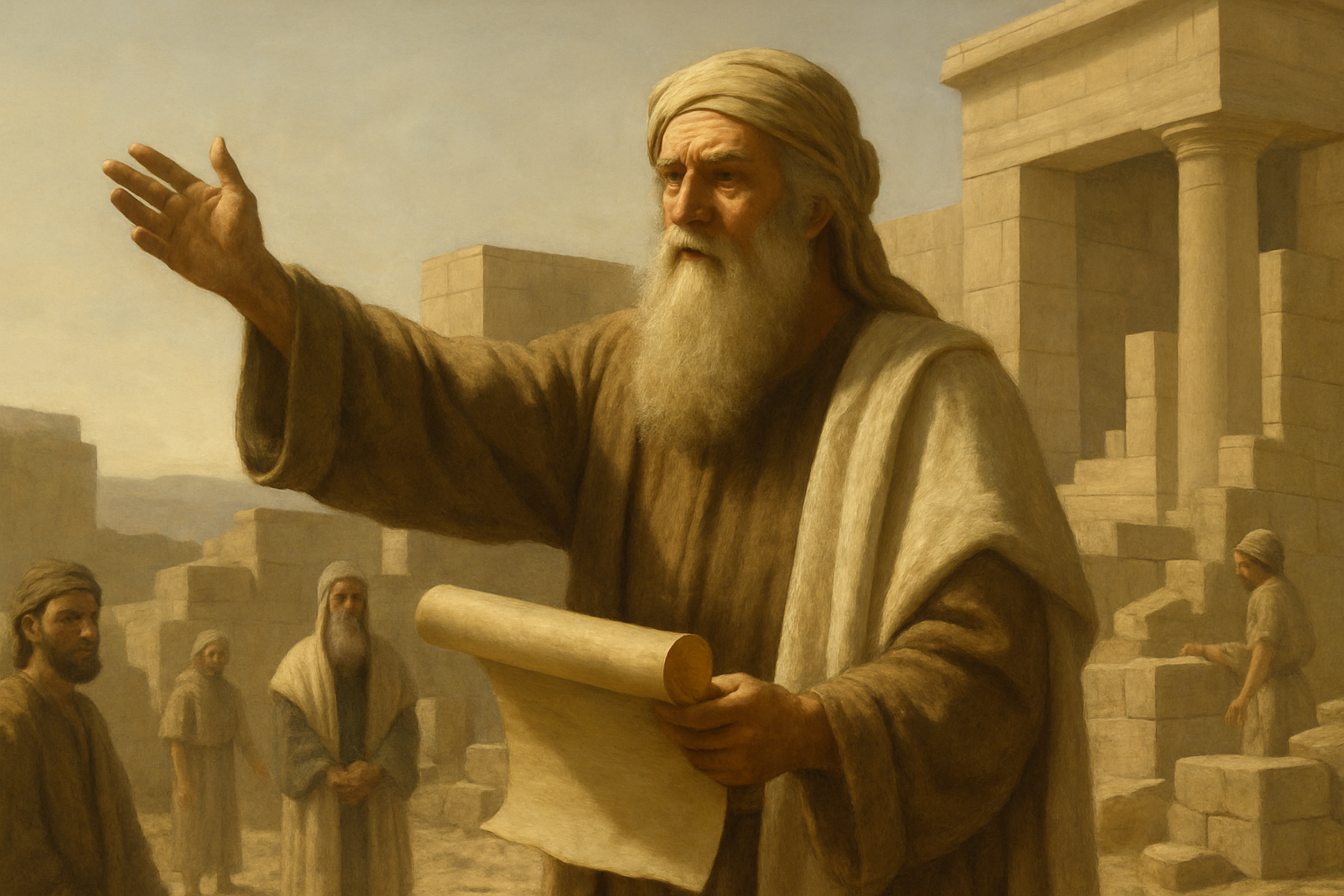
Haggai in the Bible: Meaning, Origin, and Why It Matters
Haggai is one of the Bible’s briefest prophetic voices, yet his message lands with remarkable force. His name is commonly understood as “my feast” or “festival,” and his ministry in the post-exilic period centers on the rebuilding of the temple and the restoration of proper worship in Judah.
He appears in the Old Testament at a critical moment when the returned community had grown discouraged and spiritually delayed. Haggai speaks directly to that situation, addressing leaders and people alike, and his book is closely tied to the prophetic call to obey God with renewed priority and purpose.
What Does the Name Haggai Mean?
The name Haggai is commonly associated with the Hebrew idea of “my feast” or “festival,” though the exact derivation is not completely certain. The meaning is often treated as worship-related, which fits the prophet’s setting and message, even if the biblical text does not explain the name directly.
Origin and Language
- Language: Hebrew
- Gender: Male
- Testament: Old Testament
- Type: Prophet
Life and Role in Scripture
- Birth / Early Background: Not explicitly recorded in Scripture; Haggai appears as a prophetic voice during the post-exilic period after the return from Babylon.
- Death / Final Biblical Record: His death is not recorded in Scripture, and no later biographical details are given in the biblical text.
- Role / Calling: Prophet to the returned Jewish community
- Biblical Context: Haggai ministered after the exile, when the returned remnant in Judah was struggling with unfinished temple restoration. His short prophetic book addresses leaders and the people in a time of discouragement and delayed obedience.
- Known For: He is known for urging the people to rebuild the temple and for calling them to consider their ways before God. His messages link covenant faithfulness with renewed worship and restored priorities.
Who Is Haggai in the Bible?
Haggai is an Old Testament prophet whose entire book is built around a focused call to action. He speaks to Zerubbabel, Joshua the high priest, and the returned exiles, pressing them to resume work on the Lord’s house. His ministry is short in length, but it serves a vital moment in Israel’s restoration after exile.
Biblical Role and Context
Haggai’s role in Scripture is that of a covenant messenger who challenged spiritual delay and national discouragement. He called the people to rebuild the temple, reminding them that God’s presence and blessing were tied to faithful obedience. His prophecies encouraged both leadership and community restoration.
Key Bible Verses About Haggai
Haggai 1:7 – Thus saith the LORD of hosts; Consider your ways.
Haggai 1:8 – Go up to the mountain, and bring wood, and build the house; and I will take pleasure in it, and I will be glorified, saith the LORD.
Haggai 2:4 – Yet now be strong, O Zerubbabel, saith the LORD; and be strong, O Joshua, son of Josedech, the high priest; and be strong, all ye people of the land, saith the LORD, and work: for I am with you, saith the LORD of hosts.
Haggai 2:9 – The glory of this latter house shall be greater than of the former, saith the LORD of hosts: and in this place will I give peace, saith the LORD of hosts.
Why Haggai Matters in the Bible
Haggai matters because he shows how a short prophetic ministry can have lasting impact. His book links worship, obedience, and communal renewal in the life of God’s people. For readers of the Bible, he is a clear example of a prophet speaking into a specific historical moment with clarity and urgency.
Related Names in the Bible
- Zerubbabel
- Joshua the high priest
- Ezra
- Zechariah
Frequently Asked Questions
Who was Haggai in the Bible?
Haggai was an Old Testament prophet who spoke to the returned exiles in Judah. His message focused on rebuilding the temple and renewing the people’s commitment to God.
What does the name Haggai mean?
Haggai is commonly understood as meaning “my feast” or “festival,” though the precise etymology is not fully certain. The name is usually treated as a Hebrew name with a traditional, worship-related sense.
What was Haggai known for?
He was known for urging the people to resume temple construction after the exile. His prophecy called the community to examine its priorities and obey God’s word.
Why is Haggai important today?
Haggai remains important because his message connects obedience, worship, and spiritual renewal. His book is a concise reminder that God can use a brief prophetic word to redirect an entire community.


Leave A Comment